

Why Sound Healing is the New Executive Edge
Updated October 2026
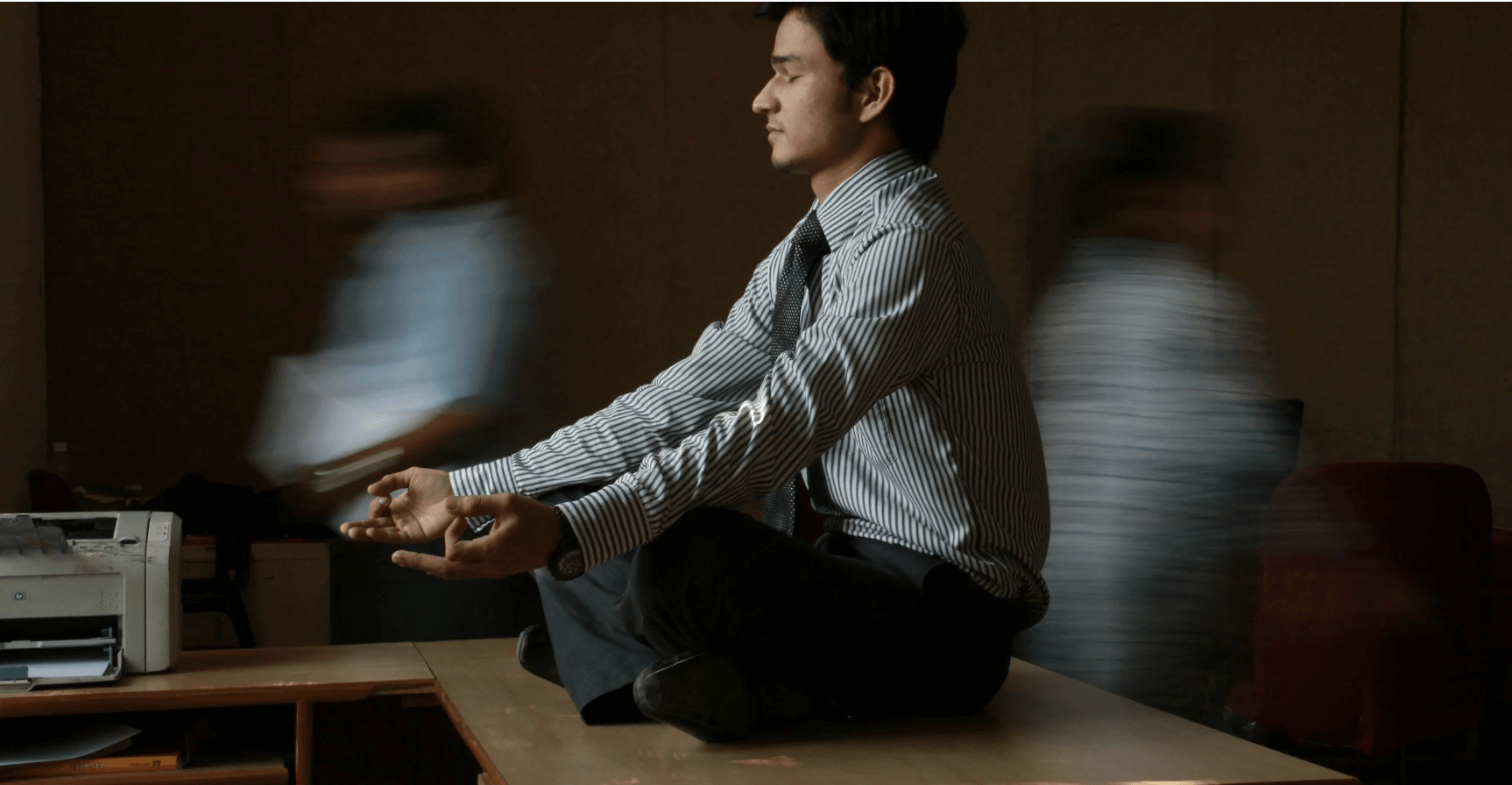
Sound healing gives executives and their teams a fast, low-effort way to move the nervous system out of chronic stress mode. That's the state behind most corporate burnout. When people are regulated, they think more clearly, react less, and make better decisions. It isn't a perk. It's maintenance on the system that does the work.
I spent over 15 years in financial services, most recently at Deloitte, working with Fortune 100 firms, and that's not counting the tax seasons that felt never-ending. There’s an unspoken rule: if everyone else is working late, you should be too. Emails after hours are expected. Weekend responsiveness matters and can quietly influence how performance is perceived.
In New York in particular, the environment is highly competitive. Being competent isn’t enough. You need to be visible, helpful to leadership, willing to take on more, and available beyond normal working hours. There’s a constant pressure to stay ahead and be seen in order to access the best opportunities.
Over time, this competitive, always-on way of working keeps the nervous system in a heightened state of alert. It creates a sustained cognitive load that the brain never fully recovers from without intentional intervention.
When Corporate Burnout Becomes the Norm
Corporate burnout is often discussed as an individual problem, something to be managed with better boundaries or time management. In reality, it’s frequently a systemic condition.
When large groups of employees operate under prolonged pressure, high cognitive demand, and limited recovery, the nervous system adapts by staying alert even when the workday ends. This is especially common among high-performing individual contributors and managers who carry responsibility without meaningful control over pace or workload.
I see this consistently when facilitating corporate sound baths across Manhattan and the Upper East Side, where many professionals are balancing demanding roles with very little true recovery time. The result is not a lack of motivation, but a diminished capacity to think clearly, creatively, and strategically.
Why Nervous System Regulation Changes How People Work
Sound healing addresses this issue at the physiological level. Rather than asking people to push through or self-regulate cognitively, it supports the nervous system in shifting out of chronic alert.
By guiding the brain into alpha and theta states, sound supports the conditions required for clarity, emotional regulation, and pattern recognition. These states are not only restorative, they are foundational for effective collaboration and problem-solving.
When individuals are regulated, teams function differently. Communication improves. Reactivity decreases. Cognitive bandwidth expands.
What I See During Corporate Sound Baths
In corporate settings, I often work with people who arrive skeptical or unsure if they’ll be able to relax at all. Many come straight from meetings or demanding workdays.
Within minutes, breathing slows. Posture softens. The room quiets.
Afterward, people often say the same thing. They didn’t realize how tense they were until they felt the contrast. Many are surprised by how light and clear they feel, even after a short session.
These shifts don’t just benefit the individual. They change the tone of the group.
From Corporate Burnout to Executive Edge
In a study of long-term care workers, a high-stress, high-turnover field, Dr. Barry Bittman found that a six-week group music program significantly reduced burnout and improved mood, with projected savings from lower staff turnover. Separate research on music in the workplace has linked sound-based interventions to better focus and task accuracy.
While turnover is often measured at the organizational level, it is frequently the downstream effect of prolonged nervous system dysregulation across teams.
When corporate burnout is addressed at its source, leadership benefits as well. Executives make better decisions when the systems around them are regulated. Strategy improves when teams are cognitively present. The executive edge emerges not from pushing harder, but from restoring clarity across the organization.
What a Corporate Sound Bath Looks Like
A corporate sound bath is a guided, [45–60] minute session where people lie down or stay seated while I play instruments like singing bowls, gongs, and the ocean drum. No experience is needed, and nobody has to "do" anything. That's the point.
Sessions can happen in a conference room, at an offsite, or as a recurring series for a team. I've run them across Manhattan, and I now also work from Lagos, Portugal, with teams holding offsites and retreats in the Algarve. For corporate events elsewhere, I travel.
Most people walk out saying some version of the same thing: "I didn't realize how wound up I was."
Rest as a Strategic Advantage
In high-pressure corporate environments, rest is often framed as time away from productivity. In reality, it’s what restores the cognitive and emotional capacity that performance depends on.
Sound healing offers a low-friction, accessible way to support nervous system regulation across organizations. Not as a luxury perk, but as a strategic tool for sustainable performance, clearer thinking, and healthier corporate cultures.
Get in touch about bringing sound healing to your team.
Frequently Asked Questions
Is sound healing appropriate for the workplace?
Yes. It's non-religious, requires no participation beyond lying or sitting comfortably, and works for people who are skeptical or new to anything "wellness." Many of my corporate clients come in doubtful and leave asking when the next one is.
How long is a corporate sound bath?
Most sessions run [45–60] minutes, including a short intro. Shorter formats work for lunch breaks or conference programming.
Do you travel for corporate events?
Yes. I'm based in Lagos, Portugal, work regularly in New York City, and travel for corporate events, offsites, and retreats.
What's the difference between a sound bath and meditation?
Meditation asks your mind to do the work. In a sound bath, the sound does the work. That's why it often lands better with high achievers who find it hard to switch off.
