

Reiki and sound healing are both gentle, relaxing practices, and you don't need any experience for either one. In Reiki, the practitioner uses gentle touch, or hands just above the body. In sound healing, you lie down and listen while instruments like crystal bowls are played around you. If you're sensitive to sound, or carrying physical tension, Reiki may suit you better. If you'd rather just lie back and listen, try a sound bath.
I'm a Reiki Master and a sound healer, and I offer both in Lagos. There's no right or wrong answer. It mostly comes down to what you're drawn to.
What Is Reiki?
Reiki is a gentle, hands-on relaxation practice that began in Japan in the early 1900s with Mikao Usui. I'm trained in the Usui lineage, which I studied with my teacher in Chicago.
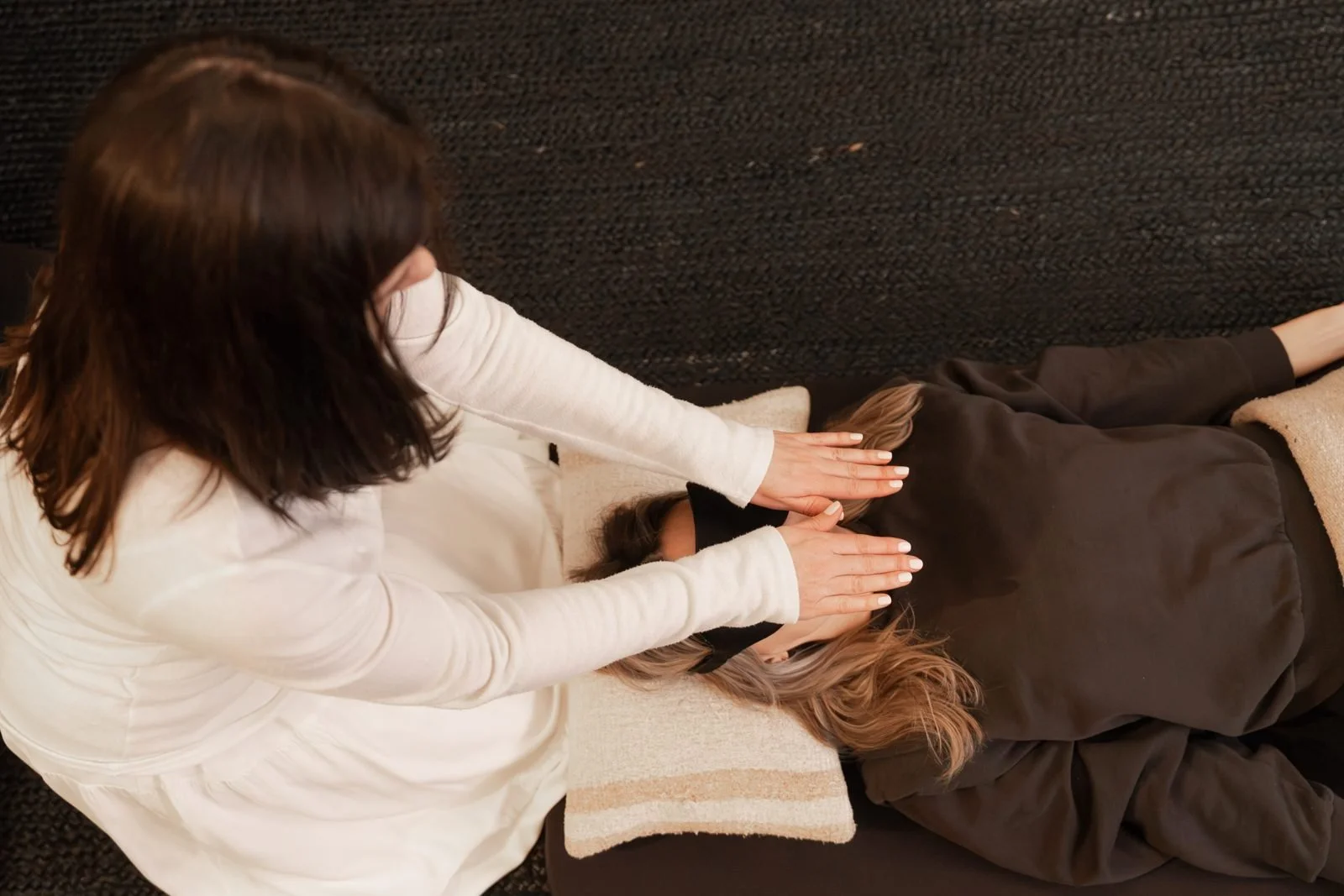
In a session, you lie down fully clothed, under a blanket if you like. I place my hands gently on, or just above, different areas of the body. My Reiki sessions range from 20 to 30 minutes up to an hour. Reiki can also be offered to a group at once, but I prefer to work one-on-one.
Many people come to Reiki to relax, or because they're carrying tension or discomfort in their body. More and more research is being done on Reiki. My teacher keeps a long list of Reiki studies on her website, from small trials to a 2024 meta-analysis on anxiety. The U.S. National Center for Complementary and Integrative Health notes the science is still catching up, so I'll tell you what I've seen and felt.
My teacher, Heather McCutcheon, also runs Reiki Brigade, a Chicago nonprofit that offers Reiki to firefighters, police officers, and 9-1-1 call center staff. First responders see so much hard stuff on the job, and they really appreciate having a quiet, gentle way to decompress. They love it.
What Does Reiki Feel Like?
Many of my clients drift off during Reiki, just like in a sound bath. When they come back, they're often a little out of it, in a good way. Most say they feel light and really nice afterward.
I always say Reiki can feel like a hug. It lifts your mood a bit.
Before I was a practitioner, I went to other people for Reiki when I was going through a tough time, especially emotionally. I always came away a little calmer and more clear-headed.
What Is Sound Healing?
In a sound bath, you lie down, close your eyes, and listen while instruments are played around you. I play crystal singing bowls and chimes. Sessions usually last about an hour.
I call sound healing a passive form of mindfulness. You don't have to do anything. You just show up, and the sound does the work. If you want to know more about the instruments, I wrote about the difference between a sound bath and a gong bath.
Reiki vs Sound Healing at a Glance
How it works: Reiki uses gentle touch or hands near the body. Sound healing uses sound from instruments played around you.
What you do: In both, you lie down fully clothed and rest. Nothing to learn.
How long: My Reiki sessions are 20 to 60 minutes. My sound baths are usually about 60 minutes.
What people notice: With Reiki, people often say it feels like a hug and they feel light afterward. With sound, many feel calmer, lighter, and clearer, and sometimes emotional. Falling asleep is normal in both.
Good for: Reiki suits people who are sound-sensitive or holding physical tension. Sound healing suits people who'd rather listen than be touched.
Private or group: Reiki can be done one-on-one or for a group, but I prefer one-on-one. Sound baths can be private or in a group.
How to Choose
Choose Reiki if:
You're sensitive to sound, or loud, sustained tones are uncomfortable for you. (I wrote more about who should check before a sound bath.)
You're holding tension or discomfort in your body.
You like the idea of gentle, hands-on care.
Choose sound healing if:
You'd rather not be touched.
You want to simply lie back and listen.
You'd like to try it in a group first.
And if you can't decide, you don't have to.
Can You Combine Reiki and Sound Healing?
Yes. In a private session, I can combine them. I usually start with Reiki and then move into the sound bath.
Frequently Asked Questions
What is the difference between Reiki and sound healing?
Reiki uses gentle touch or hands held just above the body. Sound healing uses the sound of instruments, like crystal bowls, played around you. Both are relaxing, and you stay fully clothed for both.
Is Reiki hands-on?
It can be either. Reiki usually involves gentle touch, but the practitioner can also hold their hands just above the body if you prefer.
How long is a Reiki session?
My Reiki sessions range from 20 to 30 minutes up to an hour.
Is it normal to fall asleep during Reiki or a sound bath?
Yes, in both. Many people drift off and come back feeling light and a little out of it.
Which is better for sound sensitivity?
Reiki may be a better fit if you're sensitive to sound, since it doesn't involve instruments.
Can I do Reiki and a sound bath in the same session?
Yes. In a private session, I usually start with Reiki and then move into the sound bath.
Do you offer Reiki in Lagos?
Yes. I offer Reiki in Lagos and across the Algarve as part of a private session, combined with a sound bath.
Not sure which one is right for you? Contact me and we'll talk it through on a short call. Want to start with sound? Try my free 5-Minute Sound Bath Reset at home.
